


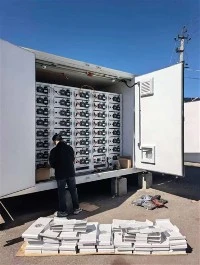
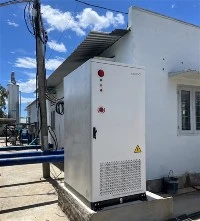
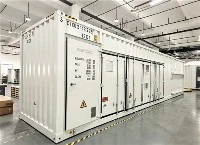
For a long time, low temperature (below -20 ℃) has been the "performance weakness" of lithium iron phosphate battery cells - severe capacity degradation, low charging and discharging efficiency, and even inability to start, limiting their application in cold regions and high-altitude scenarios. Global technology, through material improvement, structural design, and temperature control assistance, promotes the breakthrough of low temperature bottlenecks in lithium iron phosphate battery cells, increasing capacity retention to over 80% at -30 ℃ and achieving stable charging and discharging at -40 ℃, providing key support for the transformation of new energy in cold regions.
1 Material level: Improve low-temperature ion conductivity efficiency
China's "low-temperature modification of electrolyte" technology. The "composite ether electrolyte" developed by a certain enterprise is a mixture of ethylene glycol dimethyl ether (DME) and dimethyl carbonate (DMC) in a ratio of 3:7, combined with LiODFB lithium salt (concentration 1.5mol/L), to maintain fluidity of the electrolyte at -40 ℃, with an ion conductivity of 1.2mS/cm, which is five times higher than traditional carbonate electrolytes. Simultaneously adding 5% adiponitrile as a low-temperature plasticizer reduces the SEI film impedance (impedance decreases by 40% at -30 ℃), resulting in a discharge capacity retention rate of 85% for the battery cell at -30 ℃, which is 35% higher than the unmodified battery cell. This technology has been applied to new energy vehicles in Northeast China, with a 20% increase in winter range.
Nordic 'positive electrode nanomaterialization and negative electrode pre lithiation'. Norwegian manufacturers have crushed lithium iron phosphate cathode materials to 50nm (traditionally 100-200nm), increasing the specific surface area and shortening the migration path of lithium ions; The negative electrode uses "pre lithiated graphite" (pre lithiation degree of 5%) to compensate for lithium insertion loss at low temperatures. The optimized battery cell has a charging efficiency of 70% at -25 ℃ (traditional battery cells only have 30%), and the capacity retention rate still reaches 75% after 500 cycles. In the energy storage project of the Arctic scientific research station, the battery cell can discharge stably in an environment of -40 ℃, providing continuous power for scientific research equipment and solving the problem of traditional batteries' "low temperature collapse".

2 Structural design: Enhance low-temperature adaptability
The "extreme thinning and multi-layer stacking" in the United States. Tesla's lithium iron phosphate battery cells for the cold market adopt a "thin electrode design" (reducing the thickness of the positive electrode from 120 μ m to 80 μ m and the negative electrode from 100 μ m to 60 μ m) to reduce the migration distance of lithium ions inside the electrode; At the same time, the "multi-layer stacking process" (150 layers of alternating positive and negative electrodes stacked) is adopted to increase the current collection area and reduce the current density. This structure allows the battery cell to achieve a charge discharge rate of 0.5C even at -30 ℃, which is twice as high as traditional wound battery cells. In tests in Alaska, electric vehicles equipped with this battery cell can replenish 80% of their capacity after charging for 1 hour at -25 ℃, meeting daily commuting needs.
China's "flexible pole ear and insulation structure". Develop "flexible electrode ear lithium iron phosphate battery cells" for high-altitude and low-temperature scenarios (such as the Qinghai Tibet Plateau): The electrode ear is made of copper foil aluminum foil composite flexible material, which can deform slightly with temperature changes to avoid electrode ear fracture at low temperatures; The outer shell of the core is wrapped with 1mm thick aerogel insulation layer (thermal conductivity 0.018W/(m ・ K)), which, together with the built-in PTC heater (power 5W), can raise the temperature of the core to 5 ℃ within 30 minutes at -30 ℃, and the capacity retention rate can reach 90% after startup. In the off grid photovoltaic project in Yushu, Qinghai, the average daily power supply of the battery cell in winter reaches 8kWh, meeting the electricity demand of herdsmen's households.

3 Temperature Control Assistance: Scenario based Low Temperature Solution
The synergy between waste heat recovery and active heating in Russia. The communication base station energy storage system in Siberia introduces the waste heat (temperature 40-50 ℃) generated by the base station equipment (CPU, power module) into the lithium iron phosphate battery compartment through the air duct, and cooperates with the built-in heating film (power 20W/m ²) of the battery cell to form a temperature control mode of "passive recovery+active replenishment". When the ambient temperature is below -30 ℃, priority is given to utilizing waste heat. If it is insufficient, the heating film is activated to stabilize the temperature inside the cabin at 10-15 ℃. The battery capacity retention rate reaches 95%, which is 60% more energy-efficient than pure active heating. This solution increases the available energy storage capacity of base stations by 30% in winter, avoiding communication interruptions caused by low temperatures.
Phase change materials and solar preheating in Canada. For off grid scenarios in remote areas, paraffin based phase change materials (melting point 8 ℃) are filled around lithium iron phosphate battery cells. During the day, the phase change materials are heated (stored) by solar collectors, and at night, the phase change materials release heat to keep the cells insulated; At the same time, install reflective plates on the outside of the battery module to assist in preheating the battery cells using weak winter light. In the off grid cabin project in Ontario, this solution enables the battery cells to maintain temperature without external power supply in an environment of -25 ℃, with a discharge capacity retention rate of 80% and an annual power savings of 1200 kWh.
The breakthrough in low-temperature performance of lithium iron phosphate battery cells is breaking the traditional perception that 'cold regions are not suitable for lithium iron phosphate'. In the future, with the application of solid electrolytes (with a 10 fold increase in low-temperature ion conductivity) and biomimetic insulation materials (imitating the structure of Arctic fox fur), "zero preheating, full capacity" operation will be achieved in an environment of -50 ℃, further expanding the application boundaries of lithium iron phosphate batteries and providing a more economical and reliable choice for the transformation of new energy in cold regions and high-altitude areas around the world.