


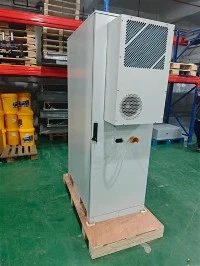
The centralized and string based energy storage technology routes play different roles in energy storage systems, each with unique advantages and limitations.

Centralized energy storage technology
Advantage
The control logic is simple: the battery packs of the centralized energy storage system are directly connected in series to form a battery cluster, and then connected in parallel to one or several large energy storage inverters (PCS) through the DC side. This structure makes the control system relatively simplified, easy to manage and maintain.
Low initial cost: Due to its simple structure and the ability to achieve large-scale procurement and centralized management, it can reduce costs in initial construction and operation maintenance.
Shortcoming
Barrel effect: All battery modules are connected in parallel, and the overall lifespan of the system depends on the weakest link, which is the battery module with the worst performance.
Inter cluster circulation problem: Different battery clusters have inconsistent discharge depths, leading to circulation phenomena, which in turn affect charging and discharging efficiency and may pose safety risks.
High operational complexity: Once a malfunction occurs, professional personnel are usually required to be present for debugging and maintenance, which increases downtime and operational costs.
Application examples
The Huaneng Huangtai 100MW/200MWh project is one of the first large-scale energy storage power stations in China to adopt a centralized PCS architecture. The project adopts a containerized assembly method, and the equipment capacity in a single container can reach several megawatt hours (MWh), suitable for grid side energy storage and supporting energy storage for large renewable energy power plants.
String based energy storage technology
Advantage
Strong flexibility: The string type energy storage system consists of multiple smaller capacity energy storage units, each with independent control and management functions, which gives it a high degree of flexibility and scalability, making it easy to flexibly expand or replenish power according to actual needs.
Higher safety: Each battery cluster is individually controlled for charging and discharging, avoiding the influence of circulating currents and achieving fault isolation; And an efficient thermal management system is adopted to ensure good temperature uniformity and longer battery life.
Easy to transport and install: The single cabinet has a compact size, making it convenient for transportation and on-site installation, especially suitable for applications with complex terrain or multi-point distribution.
Shortcoming
Increased integration complexity: Compared to centralized systems, the integration and debugging process of string type energy storage is more complex because it requires fine-grained configuration of each energy storage unit.
Overall high cost: Although the cost of individual components is lower, the investment cost of the overall system will increase due to the need for more optimizers and monitoring equipment.
Application examples
The 3MW/6MWh solar energy storage project in Linyang, Dezhou, Shandong is a typical application case of string type energy storage. This project uses intelligent string type energy storage integrated cabinets, each of which contains several energy storage units. Each unit is connected to a small PCS, and the AC output is then connected to the transformer for boosting and connecting to the power grid. This design not only improves the reliability and stability of the system, but also allows for the mixing of old and new batteries, further enhancing the adaptability and economy of the system.

Characteristics of two technological routes in terms of energy storage capacity
Centralized energy storage
Capacity limit
The capacity of a single container:
In centralized energy storage solutions, a typical energy storage container typically contains multiple battery clusters, which are connected in parallel on the DC side and then connected to a large PCS for inverter processing. According to different design standards and technical specifications, the maximum installed capacity of a single container can reach several megawatt hours (MWh). For example, it is mentioned in the data that a 40 foot container with 280Ah battery cells can have a maximum installed capacity of 1000V batteries.
Full life cycle power throughput capacity:
Due to the barrel effect of centralized energy storage, the performance of the entire system is limited by the weakest battery cluster. Therefore, under long-term operation, the actual available energy storage capacity will decrease. In addition, in order to prevent safety hazards caused by circulation problems, a certain margin is retained during charging and discharging, which indirectly reduces the effective energy storage capacity.
Capacity scalability
Applicability to large-scale projects:
Centralized energy storage is very suitable for large-scale energy storage projects at the grid level, such as large-scale energy storage power stations on the source grid side, which often require high single charge/discharge power and large total energy storage capacity. However, when it comes to expansion or power replenishment, operations must be carried out on a cabin by cabin basis, resulting in poor flexibility.
String type energy storage
Capacity limit
The advantages of modular design:
The string type energy storage system generally adopts a modular design, where each battery cluster in the energy storage integrated cabinet is connected to an independent small PCS, and then connected to the power grid through AC convergence. This architecture allows for more flexible definition of the size of each energy storage unit, theoretically combining them into any size of energy storage system based on demand. For example, it has been reported that the minimum power of string type energy storage systems starts from 50kW.
Single cabinet capacity:
Although the capacity of a single energy storage integrated cabinet is relatively small, they can easily achieve large capacity energy storage through parallel connection. Moreover, because each energy storage unit is independently controlled, even if some units have problems, it will not affect the operation of other units, which helps to maintain the stability and reliability of the overall system.
Capacity scalability
Flexible expansion methods:
A significant advantage of string type energy storage is its high flexibility, not only in adapting to various complex terrain conditions, but also in supporting the mixing of old and new batteries, and adding new energy storage units for expansion at any time according to actual needs. This means that users gradually increase their energy storage capacity based on changes in their own electricity load, without the need for a one-time investment in building large-scale facilities.
Considerations in practical applications
Selection of energy storage capacity:
Whether it is centralized or string type energy storage, when selecting specific energy storage capacity, the specific requirements of the project need to be considered, including but not limited to expected service life, target market electricity pricing policies, local climate conditions, etc. For application scenarios that require rapid deployment and limited initial investment, string based energy storage is more suitable; For large-scale energy storage projects that have already been planned, centralized energy storage is a better choice because it builds sufficient energy storage capacity in the early stages.