


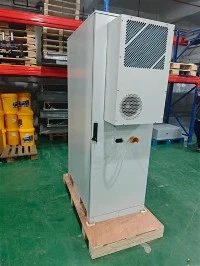
In today's increasingly diversified energy storage demand, modular design of rack mounted lithium batteries has become the key to their standing out. This design concept of disassembling core elements such as battery cells, management systems, heat dissipation components into standardized modules not only realizes the flexible expansion of "on-demand combination", but also enables the rapid deployment of energy storage systems from kilowatt to megawatt levels, significantly reduces the application threshold in different scenarios, and becomes the first choice for energy storage in data centers, communication base stations, edge computing and other fields.
1 Unit standardization: Building compatible and interoperable "energy building blocks"
The modularization of rack mounted lithium batteries began with the standardization of the most basic cell units. The mainstream products adopt a standard rack width of 19 inches, and the height of a single battery module is divided into specifications such as 1U, 2U, 3U, etc. (1U=44.45mm), with capacities ranging from 500Wh to 5kWh, like uniform sized "energy building blocks". This standardization enables interchangeability of modules from different brands. When a data center was expanding, it mixed the 2U module from brand A with the 3U module from brand B, and achieved collaborative work through a unified communication protocol. The compatibility reached over 98%, avoiding the cost waste of "one exchange, all exchanges".
Standardization of interfaces further enhances the universality of modules. The power interface adopts IEC 60309 industrial plug, and the communication interface supports RS485, CAN bus, and Ethernet, so that when new modules are connected to the system, there is no need to rewire or modify the program. In the energy storage renovation of a certain communication operator's base station, technicians completed the installation of three 2U modules in just 2 hours, increasing the energy storage capacity from 10kWh to 20kWh, saving 80% of deployment time compared to traditional non modular batteries.

2 Hierarchical architecture: seamless connection from modules to systems
Rack mounted lithium batteries adopt a three-level architecture of "module cabinet cluster", with each layer having independent management capabilities. A single module is equipped with a micro BMS, which is responsible for monitoring the voltage, temperature, and equilibrium status of the module; Cabinet level BMS consolidates all module data and controls the total charging and discharging power; The cluster controller coordinates multiple cabinets to achieve linkage with the power grid or load. This hierarchical architecture enables the system to have the ability of "fault isolation". In a certain energy storage cluster, when one module experiences a short circuit, the cabinet BMS immediately cuts off its connection, while the remaining 95% of modules can still operate normally, with an availability of 99.9%.
Hot swappable design is the finishing touch of hierarchical architecture. Hot swappable battery modules can be replaced without power outage in the system. When a financial data center deals with faulty modules, it briefly supplies power through a backup power source and completes module replacement within 5 minutes. The downtime is controlled within 1 minute, far below the industry's required 4-hour threshold. Cabinet level hot swapping allows for the addition of new cabinets during cluster operation. Through this method, a cloud computing center has expanded its energy storage capacity from 50MWh to 150MWh in three installments within six months, without affecting business operations.

3 Scene adaptability: on-demand customized "energy solutions"
In small-scale scenarios, modular design demonstrates strong spatial adaptability. In the 19 inch server cabinet of the edge computing node, two 1U lithium battery modules can be inserted to share the cabinet space with the server. The energy storage capacity is up to 2kWh, meeting the 4-hour power backup demand. A certain smart street lamp project integrates 3U modules at the bottom of the lamp post, using photovoltaic panels to charge and achieve the integration of night lighting and emergency power supply, without the need for additional land occupation during installation.
In large-scale scenarios, modular clusters can flexibly respond to load fluctuations. The 100MWh energy storage system in a certain industrial park consists of 200 500kWh cabinets, and the number of operating cabinets is adjusted according to real-time load through a cluster controller: 80% of the cabinets are used during the day when the factory starts working, and only 20% of the cabinets are reserved for standby at night, saving an annual operation and maintenance cost of 150000 yuan. When participating in grid peak shaving, the system can achieve precise power control of a single module, with a response speed of milliseconds, and smooth regulation from 10MW to 50MW can be achieved in one peak shaving process.
In the future, with the popularization of the "Module as a Service" (MaaS) concept, the modularization of rack mounted lithium batteries will evolve towards "smart plug and play". The module is equipped with AI algorithms that can autonomously identify access scenarios and adjust operational strategies; Implementing identity authentication and lifecycle management of modules through blockchain technology, making the circulation of second-hand modules more secure and efficient. This continuously evolving modular design will enable rack mounted lithium batteries to become flexible scheduling "energy cells" in the energy Internet, supporting the large-scale development of distributed energy storage.