


Against the backdrop of the accelerated transition of the global energy structure towards renewable energy, the market landscape of lithium batteries, as a core technology in the fields of energy storage and power, is undergoing profound changes and reshaping. At present, the lithium battery market presents a fierce global competition situation, with companies from different regions competing in the market based on their respective advantages, driving the rapid development of the industry.
Chinese enterprises lead the global market
Dual advantages of technology and scale
Chinese companies dominate the global lithium battery market. Chinese lithium battery companies represented by CATL and BYD have demonstrated strong capabilities in technology research and development as well as production scale. In terms of technology, Chinese enterprises have continuously increased their R&D investment and made numerous breakthroughs in mainstream technology routes such as lithium iron phosphate and ternary lithium batteries. For example, CATL's CTP (Cell To Pack) technology improves the energy density and safety of battery systems by simplifying the structure of battery modules; BYD's blade batteries have gained widespread recognition in the market for their unique structural design and high safety. In terms of production scale, China has the world's most complete lithium battery industry chain, with strong production capacity in every link from raw material extraction to battery manufacturing. In 2024, the top five companies in global energy storage cell shipments will all be Chinese companies, with CATL leading the way in shipments. Large scale production enables Chinese enterprises to effectively reduce costs and enhance the market competitiveness of their products. With the dual advantages of technology and scale, Chinese companies not only dominate the domestic market, but also export a large number of products to various parts of the world, becoming leaders in the global lithium battery market.
Diversified application scenario expansion
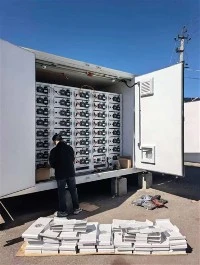
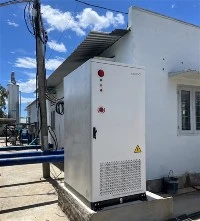
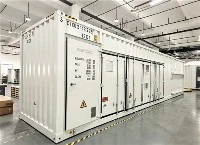
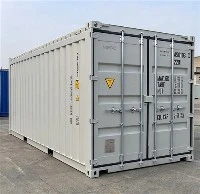
Chinese lithium battery companies have also made significant progress in diversified application scenarios. In addition to its widespread application in the field of electric vehicles, the application of lithium batteries in energy storage is also growing day by day. With the continuous increase in installed capacity of renewable energy generation in China, the demand for energy storage systems continues to rise. Chinese companies are actively expanding into the energy storage market, providing diversified lithium battery energy storage solutions for the grid side, power generation side, and user side. On the grid side, lithium battery energy storage systems are used for auxiliary services such as peak shaving, valley filling, frequency and voltage regulation, to improve the stability and reliability of the grid; On the power generation side, it is matched with renewable energy generation projects such as wind power and photovoltaics to solve the intermittent and fluctuating problems of new energy generation and improve the consumption capacity of renewable energy; On the user side, application scenarios such as home energy storage and commercial energy storage are constantly expanding to meet users' needs for power stability and economy. In addition, lithium batteries are widely used in fields such as backup power for communication base stations, power tools, and drones. The diversified application scenarios have provided a broader market space for Chinese lithium battery companies, further consolidating their position in the global market.

Technological perseverance and transformation of Japanese and Korean enterprises
Deeply cultivating in the field of high-end technology
Japanese and Korean companies have always been known for their superb technology in the field of lithium batteries, especially in high-end technology areas such as solid-state battery technology research and development, maintaining a leading position. Korean companies such as Samsung SDI and LG New Energy, as well as Japanese companies such as Panasonic, have invested significant resources in the research and development of key technologies such as solid-state electrolytes and high nickel cathode materials. For example, Samsung SDI has made significant progress in the research of sulfide solid electrolytes, and its solid-state battery energy density is expected to break through the current level and reach higher levels. These companies are trying to seize the opportunity in the future lithium battery market competition by deeply cultivating in the high-end technology field. Although solid-state battery technology has not yet achieved large-scale commercial application, Japanese and Korean companies, with their technological accumulation and research and development capabilities, will quickly push it to the market once the technology matures, which will have a significant impact on the global lithium battery market landscape.
Market strategy adjustment and transformation
Faced with strong competitive pressure from Chinese companies in the mid to low end market, Japanese and Korean companies are also actively adjusting their market strategies and seeking transformation and development. On the one hand, Japanese and Korean companies are strengthening their cooperation with internationally renowned automotive brands by providing customized lithium battery products for high-end electric vehicles, consolidating their market share in the high-end electric vehicle battery market. For example, Panasonic has maintained close cooperation with Tesla for a long time, providing high-performance lithium battery products for Tesla. On the other hand, Japanese and Korean companies are increasing their efforts to explore emerging markets and application areas. In the field of energy storage, Japanese and Korean companies have obtained orders in some overseas energy storage projects with high technical requirements, relying on their advanced technology and brand advantages. In addition, Japanese and Korean companies are actively expanding into the small-scale energy storage market, such as consumer electronics and portable energy storage devices, by launching high value-added products to meet the needs of different customer groups. By adjusting and transforming their market strategies, Japanese and Korean companies are attempting to find new growth points in the global lithium battery market and maintain their competitiveness in the industry.

Policy driven and innovative development of European and American enterprises
The rise of industries under policy support
European and American governments attach great importance to the development of the lithium battery industry and have implemented a series of policy measures to promote the rise of the local lithium battery industry. The US government attracts companies to invest in building lithium battery factories in the United States through policy measures such as providing huge subsidies and tax incentives. For example, the US Inflation Reduction Act provides significant subsidies to companies that produce lithium batteries and related raw materials domestically, attracting automotive giants such as Tesla and Ford, as well as international lithium battery companies such as CATL to build production bases in the United States. Europe has also formulated ambitious plans for the development of lithium batteries, promoting the growth of the European lithium battery industry through policy coordination at the EU level and support from member states. In countries such as Germany and France, the government actively guides enterprises to increase investment in lithium battery technology research and development, as well as production and manufacturing, and has established a number of internationally competitive lithium battery enterprises and research and development institutions. The support of policies has provided a favorable environment for the development of European and American enterprises in the lithium battery market, promoting the growth and expansion of local enterprises.
Innovation driven development model
European and American companies have unique advantages in lithium battery technology innovation. Europe and America have numerous world-class research institutions and universities with strong capabilities in basic scientific research. The close cooperation between enterprises, research institutions, and universities has formed an innovative ecosystem of deep integration of industry, academia, and research. For example, universities such as Stanford University and Massachusetts Institute of Technology in the United States have conducted extensive cutting-edge research in fields such as lithium battery materials science and battery management systems, providing theoretical support for technological innovation in enterprises. European and American companies have achieved a series of innovative achievements in battery recycling technology, intelligent battery management systems, and other areas. In terms of battery recycling, European and American companies have developed advanced recycling technologies that can efficiently recover valuable metals from lithium batteries, achieve resource recycling, and reduce environmental impact. In terms of intelligent battery management system, advanced technologies such as artificial intelligence and big data are introduced to achieve precise monitoring and control of battery status, improving battery safety and service life. The innovation driven development model has enabled European and American companies to occupy a place in the global lithium battery market and maintain a leading position in some segmented fields.