


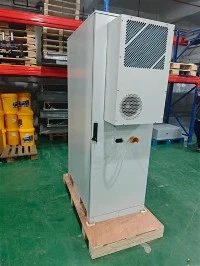
The efficient operation of rack mounted lithium batteries relies on the precise control of intelligent management systems (BMS). This system is like the "nerve center" of lithium batteries, integrating dispersed battery modules into responsive and efficient energy storage units through real-time collection of cell status, dynamic optimization of charging and discharging strategies, and collaboration with external energy networks. It achieves refined energy management in data centers, microgrids, and other scenarios, maximizing the value of each kilowatt hour of electricity.
1 Multidimensional data collection: building a "digital twin" of battery cells
Distributed sensor networks capture subtle changes. Each battery module is equipped with built-in sensors for voltage (accuracy ± 1mV), current (± 0.5% FS), and temperature (± 0.2 ℃), with a sampling frequency of 1kHz, which can capture the instantaneous state fluctuations of the battery cells. A 2U battery module can identify the voltage deviation of a single cell at 0.1V through 16 sensors, providing data support for early fault diagnosis.
Edge computing node implements localization analysis. The edge gateway at the top of the rack preprocesses the collected raw data, filters out noise, and extracts feature parameters (such as internal resistance change rate and capacity decay rate) to generate the "Health Index (SOH)" of the battery cells. This localization process reduces data transmission by 80% while ensuring that critical information is not delayed, resulting in an increase in the response speed of the BMS system in a data center to within 50ms.

2 Dynamic charging and discharging strategy: a balance between extending lifespan and improving efficiency
Adaptive charging algorithm to cope with complex working conditions. Based on the current State of Health (SOH) and temperature of the battery cell, the system automatically adjusts the charging curve: the new battery adopts constant current and constant voltage mode (CC/CV), and the full charge time is controlled within 2 hours; The aging battery (SOH<80%) switches to multi-stage pulse charging, reducing polarization effects by 10% duty cycle pulse current and extending cycle life by 20%. The actual test of a certain communication base station shows that the algorithm achieves a capacity retention rate of 85% for the battery after 500 cycles, which is 12% higher than the traditional charging mode.
Discharge balancing technology eliminates module differences. When the voltage difference between modules exceeds 50mV, the active balancing circuit is activated to transfer energy through inductance or capacitance, ensuring that the consistency error of each module's capacity is controlled within 3%. In a certain energy storage project, this balancing technology increases the total discharge capacity of rack mounted lithium batteries by 5%, avoiding wasting capacity due to premature cut-off of individual modules.

3 Energy Collaborative Dispatch: A "Flexible Cell" Integrated into Multi Energy Networks
Source load interaction in microgrid mode. BMS communicates with photovoltaic inverters and diesel generators through Ethernet, dynamically adjusting the working mode of lithium batteries based on photovoltaic output and load demand: charging at a rate of 0.5C during lunchtime when there is excess photovoltaic power; During the peak load in the evening, discharge at a rate of 1C while maintaining 20% reserve capacity to cope with sudden demands. In the microgrid of a certain industrial park, this synergy has increased the photovoltaic utilization rate to 90% and saved 400000 yuan in annual electricity bills.
The responsiveness to participate in grid auxiliary services. Rack mounted lithium batteries with virtual power plant (VPP) interface can receive grid dispatch instructions, adjust charging and discharging power within 10 seconds (range ± 10% rated power), and provide frequency regulation services. In the pilot project of PJM Power Grid in the United States, an energy storage cluster consisting of 100 rack mounted lithium battery units achieved a single frequency regulation response time of 200ms, exceeding the performance indicators of traditional generator sets, and the auxiliary service revenue obtained accounted for 30% of the total revenue.
The intelligent management system for rack mounted lithium batteries is evolving from "single machine control" to "network collaboration". In the future, with the deep integration of 5G communication and edge AI, this system will have more accurate prediction capabilities - predicting the electricity load curve 24 hours in advance, independently formulating charging and discharging plans, and real-time linkage with regional energy networks, making rack mounted lithium batteries not only energy storage devices, but also flexible and controllable "energy regulators" in smart grids, providing core support for the efficient utilization of distributed energy.