


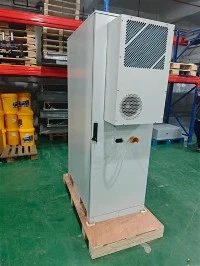
In the process of actively promoting the utilization of renewable energy and building a sustainable energy system globally, hybrid inverters, as key equipment for energy conversion and management, are playing an increasingly important role. It ingeniously integrates multiple energy processing functions, breaks the single mode of traditional inverter, and opens up a new path for efficient use and flexible allocation of energy.
Analysis of the Technical Architecture of Hybrid Inverters
The unique technical architecture of hybrid inverters is the core support for their emergence in the energy field. From a basic functional perspective, it inherits the ability of traditional inverters to convert DC power into AC power, and can stably convert the DC power generated by solar panels into AC power suitable for household and enterprise electrical equipment. But this is only a part of its capabilities, the innovation of hybrid inverters lies in the integration of energy storage system management functions. It can accurately control the charging and discharging process of the battery, and automatically store excess electricity in the battery when there is excess solar power generation; During periods of insufficient solar energy or peak electricity consumption, it is possible to promptly access the stored electrical energy from the battery, achieving smooth energy output.
In its internal circuit design, the DC-DC conversion module is one of the key components. This module is responsible for voltage regulation of the input DC power to ensure that it meets the requirements of subsequent conversion and energy storage devices. Taking the common photovoltaic hybrid inverter as an example, the voltage output by the solar panel will fluctuate with factors such as light intensity. The DC-DC conversion module converts the unstable DC voltage into a relatively stable voltage value through boost or buck operation, providing stable power input for subsequent processes. At the same time, when connecting different types of batteries, the DC-DC conversion module can also adjust the output voltage and current according to the characteristics of the battery, ensuring safe and efficient charging and discharging of the battery.
Another important component is the DC-AC inverter module, which is the core unit for converting direct current to alternating current. The DC-AC inverter module in the hybrid inverter adopts advanced power electronics technology, which can invert processed DC power into AC power synchronized with the grid frequency and phase. Accurate control algorithms play a crucial role in this process. By real-time monitoring and feedback adjustment of the inverter process, the DC-AC inverter module can ensure that the output AC power has extremely low harmonic distortion, providing high-quality power supply for various electrical equipment and avoiding damage to equipment caused by current quality issues.

Performance advantages of hybrid inverters showcased
Compared with traditional inverters, hybrid inverters have significant advantages in performance. Firstly, in terms of energy utilization efficiency, traditional photovoltaic inverters only focus on converting solar energy into AC power and integrating it into the grid or supplying it to loads. If there is excess power generation, it will only be wasted. Hybrid inverters, with their energy storage integration function, can store excess electrical energy and release it when needed, greatly improving energy utilization efficiency. According to relevant data, under the same solar power generation conditions, the energy utilization efficiency of the system using hybrid inverters can be improved by 15% -20% compared to traditional photovoltaic inverter systems, effectively reducing energy waste and improving overall energy utilization efficiency.
In terms of power supply stability, hybrid inverters also perform well. When the power grid is unstable or experiences faults, traditional inverters often fail to function properly, resulting in power outages. The hybrid inverter can quickly switch to off grid mode, relying on the stored energy from the battery to continue supplying power to the load, ensuring the continuous operation of critical equipment. In areas frequently affected by natural disasters and prone to power grid failures, the advantage of hybrid inverters is particularly prominent. For example, in coastal areas where typhoons occur frequently, many households and small businesses can still maintain basic living and production electricity during power outages caused by typhoons, such as lighting, refrigerator operation, medical equipment power supply, etc., greatly improving the stability and reliability of power supply and reducing the inconvenience and economic losses caused by power outages.
In addition, hybrid inverters also have excellent intelligent management capabilities. Through its built-in intelligent control system, it can monitor real-time information on solar power generation, battery capacity, grid status, and load electricity demand, and automatically adjust its working mode and energy allocation strategy based on this information. When there is ample sunlight during the day, prioritize using solar energy for power supply and store excess electricity in batteries; When night falls or there is insufficient sunlight on cloudy days, it automatically switches to battery powered or grid coordinated power supply mode. This intelligent management function not only improves the convenience of energy use, but also helps users plan their electricity consumption reasonably and reduce electricity costs. For example, in some areas where peak valley electricity pricing policies are implemented, hybrid inverters can charge batteries during low valley electricity pricing periods and use the stored energy from batteries during peak electricity pricing periods, effectively reducing users' electricity bills.

Expansion of Application Fields for Hybrid Inverters
Hybrid inverters have been widely used in multiple fields due to their excellent performance. In the field of household energy, it is gradually becoming a core device for achieving independent and efficient utilization of household energy. More and more households are installing solar panels and combining them with hybrid inverters and energy storage batteries. While meeting their own electricity needs, they can also feed back excess electricity to the grid to obtain certain profits. Taking Australia as an example, many households have installed solar systems and hybrid inverters on their roofs, which not only achieve self-sufficiency in most daily electricity consumption, but also allow some households to earn hundreds of Australian dollars annually by selling electricity to the grid, greatly improving the economic efficiency and autonomy of household energy.
In the field of small-scale industry and commerce, hybrid inverters also have broad application prospects. For small factories, shops, offices, and other places that require high power stability, hybrid inverters can ensure the normal operation of key equipment such as production line equipment, servers, refrigeration equipment, etc. in the event of power grid failures or fluctuations, avoiding production interruptions and economic losses caused by power outages or unstable voltage. In some small commercial and industrial places in remote areas, due to incomplete power grid coverage or poor power supply quality, hybrid inverters combined with solar energy and energy storage systems have become a reliable power solution. For example, in some remote towns in western China, many small shops and inns have solved their long-standing electricity problems by installing hybrid inverters and solar energy systems, improving the stability and reliability of their operations.
In the construction of distributed energy microgrids, hybrid inverters are an indispensable key equipment. Microgrids consist of distributed energy resources (such as solar and wind power generation), energy storage systems, loads, and control devices, aiming to achieve self balance and management of energy production, distribution, and consumption within a local area. Hybrid inverters play a role as energy hubs in microgrids, coordinating the operation of distributed energy generation and storage systems, achieving optimized energy allocation and efficient utilization. When there is an excess of distributed energy generation, the hybrid inverter controls the charging of the energy storage system; When power generation is insufficient or load demand increases, release stored energy to ensure stable power supply within the microgrid. At the same time, hybrid inverters can flexibly adjust their operating modes based on the connection status between the microgrid and the main grid, achieving power exchange and coordinated operation between the microgrid and the main grid, and improving the stability and reliability of the entire energy system.
With the acceleration of global energy transition, hybrid inverters, as innovative products in the energy field, are playing an increasingly important role in building a sustainable energy future with their unique technological architecture, outstanding performance advantages, and broad application prospects. It not only provides efficient and stable energy solutions for households, enterprises and other users, but also injects strong impetus into the development of distributed energy and microgrid construction, becoming an important force in promoting technological innovation and industrial upgrading in the energy field. In the future, with the continuous advancement of technology and further cost reduction, hybrid inverters are expected to be applied in a wider range of fields, contributing greater strength to the sustainable development of global energy.
