


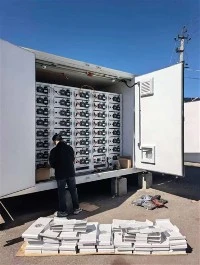
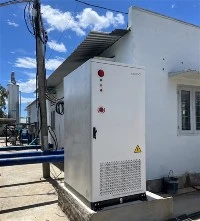
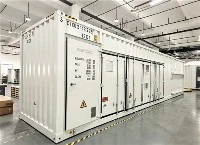
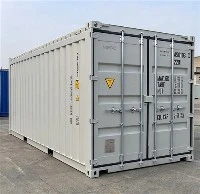
The energy storage container industry, as an important branch of the energy storage field, is entering a period of rapid development in the context of global energy transformation. However, while the industry is expanding in scale, it also faces many challenges. Thoroughly analyzing the current situation, challenges, and future trends of industrial development is of great significance for promoting the healthy and sustainable development of the energy storage container industry.

1 Current situation of industrial development
(1) Rapid growth in market size
In recent years, the global energy storage container market has shown an explosive growth trend. China, the United States, and Europe have become the main markets, with China holding a market share of over 40% thanks to policy support and vast application scenarios. Driven by the "dual carbon" target, domestic industrial and commercial energy storage and grid side energy storage projects are accelerating their implementation, driving the continuous increase in demand for energy storage containers. At the same time, the policy requirements for the construction of renewable energy and energy storage facilities have injected strong impetus into the energy storage container market. In overseas markets, the emphasis on power system stability and renewable energy consumption in Europe and America has led to the continuous emergence of energy storage container projects, further promoting the expansion of market size.
(2) The competitive landscape of enterprises is gradually taking shape
At present, the energy storage container market is fiercely competitive, forming a diversified enterprise pattern. Leading companies in the battery industry, such as CATL and BYD, dominate the market with their advantages in battery technology, supply chain, and brand. They can provide a one-stop solution from battery production to system integration, and the products are widely used in large-scale energy storage projects. Sunshine Power, Huawei and other companies focus on energy storage system integration and intelligent management technology, with strong competitiveness in areas such as inverters and monitoring systems. Through cooperation with battery companies, they provide customers with complete energy storage container solutions. In addition, some emerging companies inject new vitality into the market by adopting differentiated competition strategies and focusing on specific niche markets, such as small household energy storage containers and high safety energy storage containers.
(3) Technological innovation continues to advance
In terms of technology, energy storage containers continue to achieve innovative breakthroughs. In terms of battery technology, new types of battery materials with high energy density and long lifespan are constantly emerging, such as solid-state batteries, sodium ion batteries, etc., which are expected to be applied to energy storage containers to improve their performance and safety. In terms of system integration, the design concept of modularity, lightweight, and high integration continues to deepen, making the installation, transportation, and maintenance of energy storage containers more convenient. The deep integration of intelligent control technology with the Internet of Things, big data, and artificial intelligence has enabled remote monitoring, fault warning, and optimized operation of energy storage containers. For example, optimizing the charging and discharging strategies of energy storage containers through intelligent algorithms can improve energy utilization efficiency by 10% -15%.

2 Facing challenges
(1) Cost pressure constrains industrial development
The cost of batteries accounts for as much as 60% -70% of the cost of energy storage containers. In recent years, the prices of battery raw materials such as lithium, cobalt, and nickel have fluctuated dramatically. For example, the price of lithium carbonate has skyrocketed and plummeted between 2022 and 2023, bringing enormous cost pressure to enterprises. In addition, the research and development, production, transportation, installation, and operation costs of energy storage containers cannot be ignored. The higher initial investment results in insufficient economic viability for some projects, especially in the field of user side energy storage, where the investment payback period is longer and affects the speed of market promotion. How to reduce costs and improve the economic efficiency of projects is an important challenge facing the industry.
(2) Security risks and technical standards urgently need to be improved
Energy storage containers involve multiple fields such as batteries, electricity, and fire protection, and safety risks cannot be ignored. Safety accidents such as battery thermal runaway and fires occur frequently, which puts higher demands on the safety of energy storage containers. At present, there is a lack of unified technical standards and safety specifications for energy storage containers, and products from different enterprises have differences in performance indicators, interface protocols, safety protection, etc., which increases the difficulty of system integration and safety hazards. It is urgent to establish a comprehensive security testing and certification system, standardize industry development, and ensure user safety.
(3) Insufficient innovation in business models
At present, the business model of energy storage containers is relatively single, mainly relying on income sources such as peak valley electricity price arbitrage and power auxiliary services. In some regions, the peak valley electricity price difference is small, and the auxiliary service market mechanism is not perfect, resulting in unstable project revenue. In addition, the integrated development model of energy storage containers with renewable energy and smart grids is still in the exploratory stage. How to achieve diversified profits through business model innovation is an important issue facing the industry.

3 Future Trends
(1) Technological innovation drives cost reduction and performance improvement
In the future, energy storage containers will continue to innovate in materials, structures, and control technologies. The industrial application of new battery materials such as solid-state batteries and sodium ion batteries is expected to further reduce costs, improve energy density, and enhance safety. In terms of structural design, modular, lightweight, and highly integrated energy storage containers will become mainstream, making them easy to transport, install, and maintain. At the same time, the deep integration of intelligent control technology with the Internet of Things, big data, and artificial intelligence will achieve precise management and optimized operation of energy storage containers, improving system efficiency and reliability. It is expected that by 2030, the cost of energy storage containers will decrease by 30% to 50%, and energy density will increase by more than 50%.
(2) Policy support and market mechanism improvement promote industrial development
Governments around the world will continue to introduce policies to support the development of the energy storage industry, reducing project investment costs and stimulating market vitality through measures such as subsidies, tax incentives, and access policies. At the same time, the reform of the electricity market will be accelerated, improving the peak valley electricity pricing mechanism, establishing auxiliary service markets, exploring capacity pricing mechanisms, etc., to create more profit space for energy storage containers. In addition, with the gradual clarification of the trading rules for energy storage participating in the electricity market, the business model of energy storage containers will become more diversified, and the industrial development environment will be further optimized.
(3) Multi domain integration expands application scenarios
Energy storage containers will be deeply integrated with fields such as renewable energy, smart grids, and electric vehicles, expanding their application scenarios. In the integrated wind solar energy storage project, energy storage containers achieve stable output of renewable energy; In V2G mode, electric vehicles and energy storage containers operate in coordination to achieve bidirectional power flow; In the construction of virtual power plants, energy storage containers are an important component and participate in power system scheduling. These integrated developments will bring new growth points to the energy storage container industry and promote its development towards scale and intelligence.