


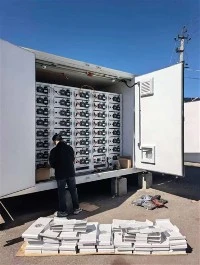
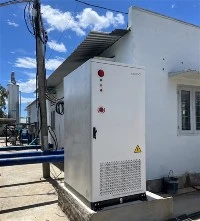
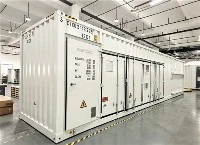
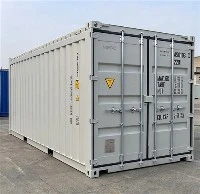
In the continuous development and transformation of the energy field, energy storage containers, as an efficient and flexible energy storage solution, are emerging in numerous application scenarios with their unique advantages, becoming a key "energy hub" connecting energy production and consumption, providing solid guarantees for stable energy supply and efficient utilization in different fields.
Remote areas and emergency power supply scenarios: the guarantor of reliable electricity
Solution to the problem of power supply in remote areas
In remote areas such as mountainous regions, islands, and sparsely populated border areas, due to complex geographical conditions and dispersed population distribution, the construction of power grids is difficult and costly, resulting in unstable power supply in these areas, and even situations where some areas cannot access the power grid. The emergence of energy storage containers provides an effective way to solve this problem. Energy storage containers can be combined with local renewable energy generation equipment, such as small wind turbines, solar panels, etc., to build an independent off grid power system. During the day when there is sufficient sunlight or strong wind, renewable energy generation equipment stores the generated electricity in energy storage containers; At night or in bad weather with insufficient renewable energy generation, energy storage containers release stored electricity to provide stable power supply for local residents and small businesses. For example, on some islands and reefs in the South China Sea, the deployment of energy storage containers and solar power generation systems has successfully solved the long-standing electricity problem on the islands, ensuring the daily electricity consumption of residents and the normal operation of infrastructure on the islands, greatly improving local living and production conditions.
Key role in emergency power supply
In the face of emergencies such as natural disasters and sudden events, traditional power grids may be severely damaged, leading to widespread power outages. At this time, energy storage containers, as important equipment for emergency power supply, can quickly play a role. Whether in rescue sites after natural disasters such as earthquakes and floods, or in localized power outages caused by emergencies, energy storage containers can serve as mobile power sources to provide urgently needed power support for emergency command centers, medical rescue equipment, temporary shelters, and more. Its rapid deployment and flexible mobility enable it to reach the required location in the shortest possible time, ensuring the normal operation of key equipment and providing strong support for emergency rescue and response work. For example, after a certain earthquake disaster, rescue teams quickly transported multiple energy storage containers to severely affected areas, providing electricity for temporary hospitals, ensuring the normal operation of medical equipment, and buying valuable time to save lives.

Industrial and Commercial Scenarios: Optimizers of Energy Management
Peak valley electricity price arbitrage and production guarantee in industrial enterprises
For industrial enterprises, electricity costs are an important component of operating costs. In some areas where peak valley electricity pricing policies are implemented, electricity prices are higher during peak hours and lower during off peak hours. By installing energy storage containers, industrial enterprises can charge during low electricity price periods and discharge during peak electricity price periods for internal production use, achieving peak valley electricity price arbitrage and effectively reducing electricity costs. Taking a large steel enterprise as an example, after introducing energy storage containers, the enterprise utilized the peak valley electricity price difference to reduce monthly electricity expenses by about 20%, greatly improving the economic benefits of the enterprise. In addition, in the industrial production process, some key equipment requires extremely high stability of power supply, and a brief power outage may cause the production line to stagnate, resulting in huge economic losses. As a backup power source, energy storage containers can seamlessly switch during power outages, ensuring the normal operation of production equipment, guaranteeing production continuity, and avoiding losses such as product scrap, equipment damage, and order delays caused by power outages.
Power stability and service improvement in commercial venues
In commercial places such as shopping malls, hotels, office buildings, etc., the stability of power supply directly affects the consumer experience and the business efficiency of merchants. Energy storage containers can be used as backup power sources to quickly provide stable electricity to commercial premises in the event of power failure or voltage fluctuations, ensuring the normal operation of lighting, elevators, air conditioning and other equipment, and avoiding customer loss and interruption of commercial activities caused by power outages. For example, in a large shopping mall, after installing energy storage containers, during a brief power outage, the energy storage containers were promptly activated, and the lighting and elevators in the mall operated normally. The shopping experience of customers was not affected, and the mall's normal business was maintained. In addition, for some commercial activities that require high power quality, such as e-sports competitions in shopping malls, important conferences in hotels, etc., energy storage containers can also provide high-quality power guarantee, improve the level of commercial services, and enhance the competitiveness of commercial venues.
Distributed Energy and Microgrid Scenarios: Promoters of Energy Synergy
Efficient utilization of distributed energy
With the widespread application of distributed energy sources such as distributed photovoltaic power generation and small-scale wind power generation in the energy field, energy storage containers play an important role in promoting the efficient utilization of distributed energy. Distributed energy generation has the characteristics of decentralization and intermittency, and its power generation is greatly affected by factors such as weather and time. Energy storage containers can store excess electricity when there is an excess of distributed energy generation; When there is insufficient power generation, releasing electrical energy can achieve the "peak shaving and valley filling" of distributed energy generation, and improve the efficiency of energy utilization. For example, in a community where distributed photovoltaic power generation projects are concentrated, multiple energy storage containers are installed to store the excess electricity generated by each household's photovoltaic power generation equipment. When there is insufficient photovoltaic power generation at night or on cloudy days, the stored electricity is distributed to community residents for use, achieving self-sufficiency and efficient utilization of energy within the community and reducing dependence on external power grids.
Stable operation of microgrids
In microgrid systems, energy storage containers are key components that ensure the stable operation of the system. Microgrid networks are often composed of distributed energy, energy storage devices, loads, and control systems, which can achieve self generation, self power supply, and self-management. Energy storage containers can effectively balance the power difference between distributed energy generation and user loads during microgrid operation, suppress system frequency and voltage fluctuations, and ensure the stable operation of microgrids. When the microgrid is connected to the main grid, the energy storage container can also participate in auxiliary services such as peak shaving and frequency regulation of the grid, improving the stability and reliability of the entire power system. For example, in a microgrid project in an industrial park, by equipping energy storage containers, the microgrid can maintain stable operation in the face of fluctuations in distributed energy generation and changes in user loads, providing high-quality power supply for enterprises in the park. At the same time, it can also feedback excess electricity to the main grid, achieving bidirectional energy flow and optimized configuration.
