


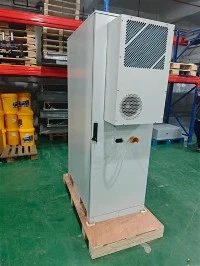
In the vast field of energy storage technology, 280Ah battery cells have become the focus of the industry in the past period due to their unique advantages, playing a key role in various application scenarios. Despite facing emerging technological challenges, their influence should not be underestimated.
1 Performance Analysis: Balancing Energy and Efficiency
The 280Ah battery cell, taking the common lithium iron phosphate system as an example, exhibits remarkable performance. Its nominal voltage is mostly 3.2V, and a single battery cell can output up to 896Wh of energy. In terms of energy density, many products have a weight energy density of 165Wh/kg and a volume energy density of 351Wh/L. This data means that under limited space and weight constraints, they can store relatively more electrical energy, providing the possibility for compact design of energy storage systems.
The charging and discharging performance is equally excellent. Some battery cells can achieve charging and discharging rates of 1C or even higher, completing the process of fully charging or discharging within 1 hour. Moreover, its charging and discharging process is stable, with minimal voltage fluctuations during multiple cycles, ensuring the stable operation of the supplied equipment. Based on the application data of a well-known 280Ah battery cell product in industrial and commercial energy storage scenarios, the voltage deviation is always controlled within ± 0.05V during continuous charging and discharging tests, ensuring the stability of power output.

2 Application panorama: an expert in adapting to diverse scenarios
(1) Household energy storage: the guardian of household energy
In the household sector, 280Ah battery cells provide a reliable power support for households. During the day, when there is excess electricity generated by rooftop photovoltaic panels, the electrical energy can be efficiently stored in a household energy storage system composed of 280Ah battery cells; When there is a shortage of electricity at night or on cloudy days, the battery cells release electrical energy to meet the electricity needs of household lighting, appliance operation, etc. In a small town in Europe, many households have installed energy storage devices based on 280Ah batteries, achieving an average self-sufficiency rate of 70% in household electricity consumption, significantly reducing dependence on the power grid for purchasing electricity. At the same time, in the peak valley electricity price arbitrage, it saves households about 500 euros in electricity expenses every year.
(2) Industrial and commercial energy storage: an efficiency engine for peak shaving and valley filling
For industrial and commercial users such as factories and shopping malls, 280Ah battery cells help achieve effective control of electricity costs. During periods of low electricity prices, battery cells fully store low-priced electricity; During peak hours, release stored electricity to supply equipment operation and avoid high peak electricity costs. Taking a certain electronic manufacturing factory as an example, after introducing a 1MWh energy storage system composed of 280Ah battery cells, through precise peak shaving and valley filling strategies, monthly electricity bills were reduced by 30%, saving over 500000 yuan in electricity bills in a year. At the same time, in the event of a power outage in the grid, the energy storage system can serve as a backup power source to ensure the continuous operation of key equipment and avoid production stagnation and economic losses caused by power outages.
(3) Grid level energy storage: the ballast stone for stable electricity
At the grid level, 280Ah battery cells participate in the construction of large-scale energy storage power stations, undertaking important tasks such as peak shaving, frequency regulation, and backup power supply. When the power grid is in peak demand, the battery cells release electrical energy to alleviate power supply pressure; Absorb excess electricity during low periods to avoid energy waste. In some areas with a high proportion of new energy generation, such as a wind power base in northwest China, the supporting energy storage power station uses a large number of 280Ah batteries, effectively smoothing out the intermittent fluctuations of wind power, improving the stability of wind power grid connection by 35%, reducing the impact on the power grid, and ensuring the safe and stable operation of the regional power system.

3 Market Wave: From Brilliance to Coexistence of Challenges
Looking back at the market history, from 2018 to 2023, with the rapid development of renewable energy worldwide and the explosive demand for energy storage, 280Ah battery cells have ushered in a golden period of development due to their mature technology and high cost-effectiveness. Domestic and foreign battery giants such as CATL and BYD have successively laid out their presence, with a large number of energy storage products based on 280Ah batteries entering the market. Their market share has rapidly increased in developed regions such as Europe and North America, becoming the mainstream choice for energy storage systems.
However, in recent years, with the continuous advancement of the energy storage market and the upgrading of user demand, 280Ah batteries are facing many challenges. On the one hand, its energy density is close to the technological bottleneck, making it difficult to meet the stringent requirements for higher capacity and longer endurance energy storage systems. For example, in some long-term energy storage projects, new high-energy density battery cell products have more advantages. On the other hand, in scenarios where high rate charging and discharging are frequent, the cycle life of 280Ah battery cells is relatively short, and their performance deteriorates rapidly, which affects the economic efficiency of the energy storage system throughout its entire life cycle. In addition, the fluctuation of raw material prices such as lithium and cobalt has led to high production costs for 280Ah battery cells.
Faced with challenges, enterprises actively explore improvement paths, such as improving the performance of 280Ah battery cells and extending their cycle life through material optimization, structural innovation, and other means. At the same time, in some cost sensitive and performance demanding application scenarios, 280Ah batteries still occupy a certain market share with mature industrial chains and stable supply, and continue to emit solar thermal energy in the energy storage field. In summary, the 280Ah battery has left a profound mark on the development of energy storage. Despite facing competition, it remains a powerful support for energy storage solutions in specific scenarios and is expected to be revitalized through technological innovation in the future.