


They offer a more predictable power decay. These advanced batteries have a well-defined power decay curve. This means that users can accurately predict how much power will be available as the battery discharges. In applications like remote sensing devices, where power management is critical, this predictability allows for better planning and operation. For example, a remote sensing satellite needs to know exactly how much power it will have left at any given time to schedule its data collection and transmission tasks. The battery's predictable power decay helps ensure the satellite operates smoothly and accomplishes its mission.
It features a self-adaptive vibration control system. This system detects vibrations in real-time and automatically adjusts its damping characteristics to counteract them. It's particularly useful in machinery and structures that experience varying vibration frequencies and amplitudes, such as helicopters, bridges, and industrial pumps. In a helicopter, the self-adaptive vibration control system can reduce cabin vibrations, enhancing passenger comfort and reducing fatigue on components. For bridges, it helps to mitigate the effects of wind-induced vibrations, preventing structural damage. In industrial pumps, it ensures smooth operation and prolongs the life of the equipment by minimizing vibration-related wear and tear.
It's a jewel of innovation in the power electronics for 3D printers. This establishment manufactures high-precision power supplies for 3D printing equipment. The manufacturing process emphasizes stability and accuracy. These power supplies need to provide a consistent voltage and current to ensure the precise deposition of materials layer by layer. Using advanced feedback control systems, they can compensate for any fluctuations in the power source. The facility has a 3D printing lab where the power supplies are tested in conjunction with different 3D printers to optimize performance. This enables the creation of high-quality 3D printed objects with intricate details.
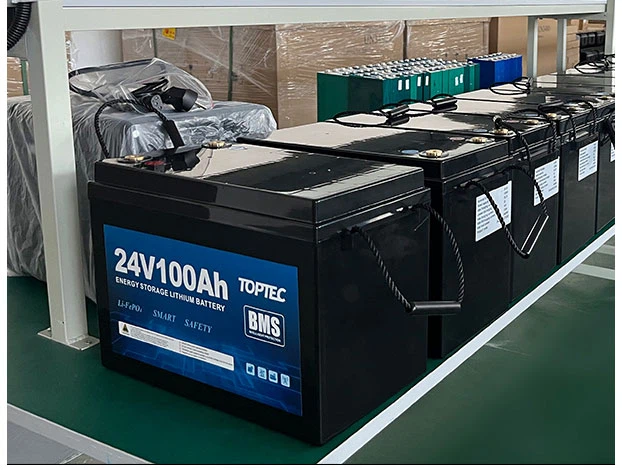
| Voltage | 12V/24V |
| Capacity | 100/200Ah |
| Cycle Life | >3000 cycles |
| Efficiency of Charge | 100% @0.5C |
| Efficiency of Discharge | 96~99% @1C |
| Charge Voltage | 14.6±0.2V |
| Charge Current | 60A |
| IP Class | IP65 |















FAQ
Q: How does the thermoplastic injection molding process for producing plastic parts work?
A: The thermoplastic injection molding process is a widely used method for manufacturing plastic parts. First, thermoplastic pellets are fed into a heated barrel. The barrel heats the pellets until they melt. Then, the molten plastic is injected under high pressure into a mold cavity. The mold is usually made of metal and has the desired shape of the part. Once the plastic fills the cavity, it cools and solidifies. The mold is then opened, and the finished plastic part is ejected. This process allows for high production rates and can produce parts with complex shapes. In the automotive industry, it's used to produce dashboard components, interior trim, and many other plastic parts.
Hot Tags: bms 25.6v 100ah lifepo4 battery pack, China bms 25.6v 100ah lifepo4 battery pack manufacturers, suppliers, 600ah lithium battery, lithium truck battery, cr2 lithium battery, 12v lithium marine battery, 24v 12ah lithium ion battery, lithium solar batteries 48v


