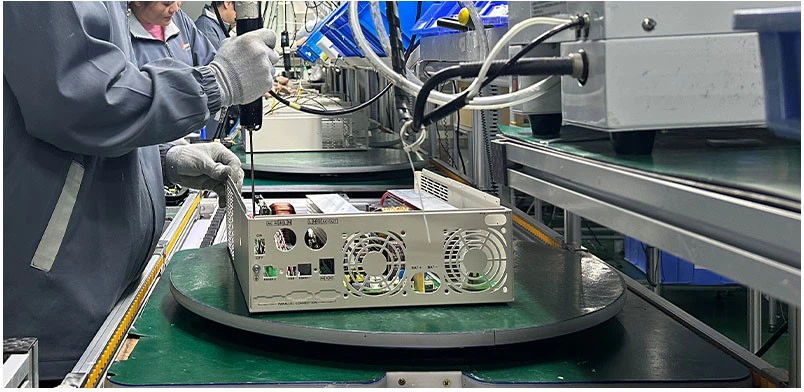
Its cooling system is a marvel of engineering. It employs a combination of passive and active cooling methods. The heat sinks, made from highly conductive materials, dissipate heat through natural convection. Additionally, quiet yet powerful cooling fans kick in when the temperature rises, ensuring that the internal components stay within their optimal operating temperature range. This dual cooling approach not only enhances the inverter's reliability by preventing overheating but also reduces the noise level during operation, making it suitable for use in quiet residential areas or noise-sensitive environments like hospitals and libraries.
Robotics and Automated Optical Inspection (AOI) in Assembly: Robotics and AOI are increasingly used in the assembly process. Robots can perform tasks such as precise component placement, soldering, and final assembly with high accuracy and repeatability. AOI systems use cameras and image processing algorithms to inspect the assembled PCBs for defects, such as missing components, misaligned parts, or soldering faults. These automated technologies improve the quality and speed of production, reducing human errors and ensuring that each inverter meets the highest standards.
The factory has a team of calibration technicians. They are responsible for calibrating all measurement and test equipment used in the production process. This ensures that the data collected during testing and quality control is accurate and reliable. They follow strict calibration procedures and use traceable standards to maintain the highest level of precision.

| Model |
SUN-10K
|
|
Battery
|
Lead-acid / Li-lon
|
|
Battery Voltage
|
40~60V
|
|
DC Input Power
|
13000W
|
|
MPPT
|
200-650V
|
|
PV Input Current
|
26+13
|
|
AC Output Power
|
10000W
|
|
Frequency and Voltage
|
50/60Hz; 230/400V
|
|
Efficiency
|
>97% |
|
Grid Regulation
|
CEI 0-21, VDE-AR-N 4105, NRS 097, IEC 62116, IEC 61727, G99, G98,
VDE 0126-1-1, RD 1699, C10-11
|
|
Communication
|
RS485; CAN
|
|
Protection
|
IP65
|