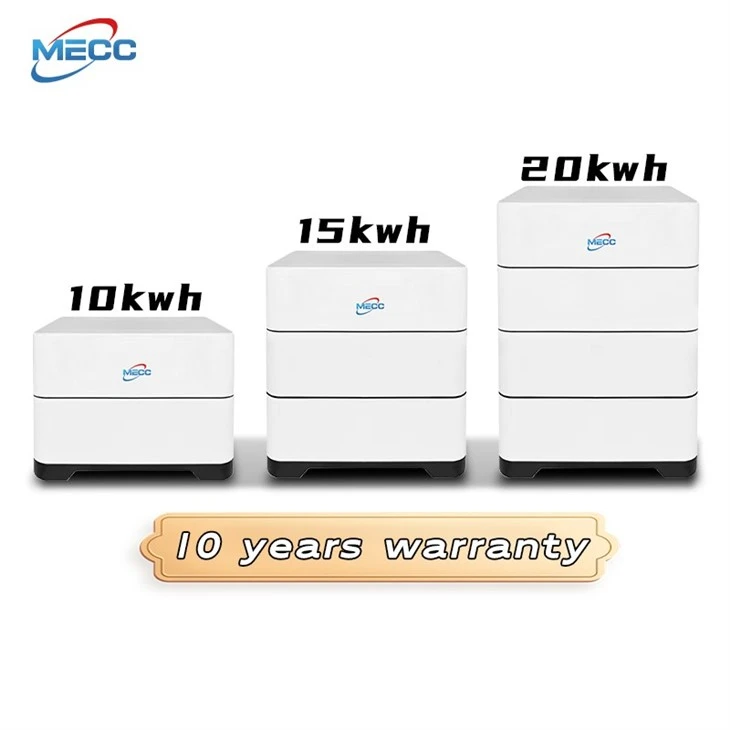
5-30KWH Stacked Lithium Batteries
Power & Capacity Performance: Operates at a nominal 48V, with a safe range of 46.4V (discharge cutoff) to 57.6V (charge cutoff), ensuring stable power for sensitive equipment like data center UPS systems and industrial machinery. The 400AH model stores 19.2kWh, while the 600AH variant holds 28.8kWh, both capable of sustaining 5–10kW loads for extended periods-from powering office buildings during outages to supporting solar farms through night hours. It handles continuous discharge currents of 150A (400AH) and 225A (600AH), with peak surges over 300A, making it suitable for high-demand scenarios like EV charging stations or sudden industrial load spikes.
Safety & Longevity: The integrated BMS provides comprehensive protection, including overcharge safeguards (triggered at 57.6V), over-discharge prevention (activated below 46.4V), and defenses against overcurrent (300A continuous) and short circuits (600A peak). It regulates temperature reliably from -20°C to 60°C, with automatic shutdown at 70°C to prevent overheating. Active cell balancing ensures uniform charge across 16 series-connected LiFePO4 cells (3.2V each), preventing uneven aging and maximizing capacity retention. This technology, combined with LiFePO4 chemistry, delivers 6,000+ deep cycles at 80% depth of discharge-10x more than lead-acid-with a 15–20 year lifespan and zero maintenance (no watering or acid checks).
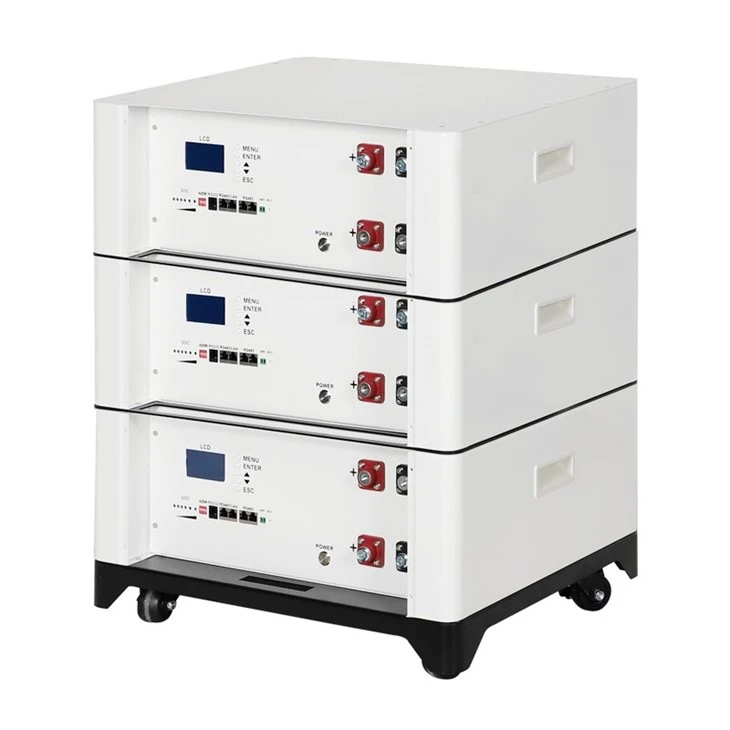
Design & Scalability: Housed in a fire-retardant, IP65-rated casing, the battery resists dust, moisture, and vibration, making it suitable for indoor, outdoor, marine, or industrial installations. Its compact footprint (e.g., 400AH module: 560×380×833mm) takes up 50% less space than lead-acid equivalents, saving valuable real estate. The modular stacking design allows plug-and-play parallel expansion via busbar connectors, eliminating complex wiring-users can scale capacity up to 2.4MWh by adding more units, adapting effortlessly to growing energy demands.
Efficiency & Compatibility: With 95% round-trip energy efficiency, it significantly reduces energy waste compared to lead-acid batteries (80% efficiency). It integrates seamlessly with mainstream inverters (SMA, Huawei, Victron) via standardized RS485/CAN protocols, ensuring compatibility with existing renewable energy systems and grid-tied setups. An LCD display and real-time monitoring (SOC, SOH, voltage) via communication ports enable precise system management, making it a hassle-free addition to any energy infrastructure.
- What are the advantages of lithium iron phosphate batteries?
They have good thermal stability, high safety, and long cycle life.
- What is the chemical structure of lithium iron phosphate batteries?
It consists of lithium iron phosphate as the cathode material.
- How does the performance of lithium iron phosphate batteries in high - power applications?
They can handle high - power demands well due to their stable structure.
- Are lithium iron phosphate batteries more stable in terms of thermal management?
Yes, they have better thermal stability compared to some other lithium battery chemistries.
- What is the charging and discharging efficiency of lithium iron phosphate batteries?
They have relatively high efficiency in both charging and discharging processes.
- How do lithium iron phosphate batteries compare in terms of lifespan to other lithium batteries?
They often have a longer lifespan under normal usage conditions.