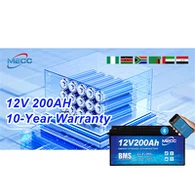
It is designed to be stackable for modular power systems. The modular battery can be stacked vertically or horizontally to create larger power banks. This flexibility allows for easy customization of power capacity according to specific requirements. In a data center, for example, administrators can stack multiple batteries to build a backup power system that meets the facility's exact needs.
They are produced using a sputtering deposition process for thin film coatings. Sputtering involves bombarding a target material with high-energy ions, causing atoms to be ejected and deposit onto a substrate. This process can create thin films with a wide range of properties, such as conductivity, transparency, and hardness. In the production of display screens, sputtering is used to deposit thin films of metals and oxides to form electrodes, conductive layers, and anti-reflective coatings. In the optical industry, it can be used to produce high-quality optical coatings for lenses and mirrors. The ability to precisely control the sputtering parameters allows for the customization of film properties to meet specific application requirements.
Tucked away in a research valley, it's a haven for superconducting power technology. This establishment focuses on developing superconducting power cables and devices that can transmit electricity with zero resistance. The production process involves handling extremely low-temperature materials and complex fabrication techniques. The superconducting cables are made from materials like niobium-titanium alloy and require cryogenic cooling to operate. The facility has a superconducting testing lab where the cables and devices are tested for their superconducting properties and power transmission capabilities at ultra-low temperatures. This technology could transform the power grid, enabling more efficient and long-distance power transfer.
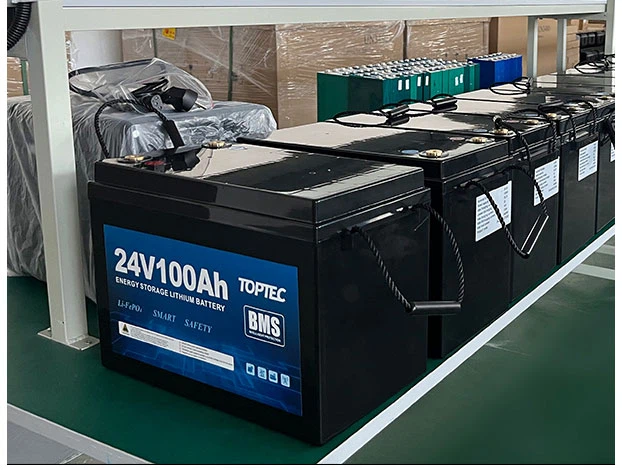
| Voltage | 12V/24V |
| Capacity | 100/200Ah |
| Cycle Life | >3000 cycles |
| Efficiency of Charge | 100% @0.5C |
| Efficiency of Discharge | 96~99% @1C |
| Charge Voltage | 14.6±0.2V |
| Charge Current | 60A |
| IP Class | IP65 |















FAQ
Q: What is the magnetic levitation (maglev) conveyance system for material handling and how does it work?
A: The maglev conveyance system revolutionizes material handling. It uses the principle of magnetic levitation, where magnetic fields are employed to suspend and move objects without physical contact. In the manufacturing facility, components and materials are placed on carriers that interact with magnetic coils. These coils generate magnetic fields that repel or attract the carriers, depending on the design, causing them to levitate and move. This eliminates the need for wheels or conveyor belts that make physical contact with the transported items. It reduces friction and wear, which is crucial in industries like electronics and semiconductor manufacturing, where delicate components need to be moved quickly and accurately.
Hot Tags: bms 12v 200ah lifepo4 battery pack, China bms 12v 200ah lifepo4 battery pack manufacturers, suppliers, 3 7 v 18650 lithium battery, lithium battery for caravan, 1200mah lithium battery, Deep Cycle Solar Lithium Battery Pack, li ion phosphate battery, 3 6 volt lithium battery